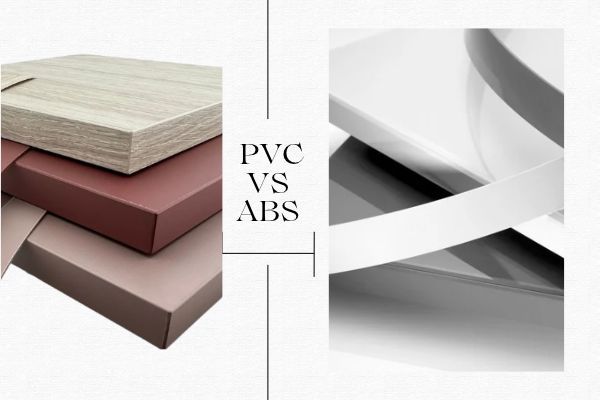

Furniture factories and panel distributors often ask the same sourcing question: should we run ABS vs PVC edge banding on this program? Both cover raw board edges, both come in solid colors and wood grain, and both run on common edgebanders. The wrong pick shows up later as cost overruns, rejected shipments, or edges that do not match the buyer’s material rule.
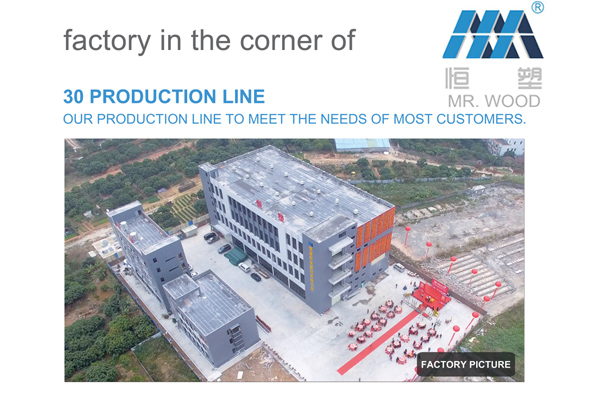
This guide is written for B2B buyers who need a clear decision path—not a lab lecture. It also points to how a factory like Hengsu Edge Banding (Dongguan Hengsu New Material Co., Ltd.) supports PVC and ABS programs with color matching, OEM packing, and export lead times.
Quick answer
| Decision gate | Prefer |
|---|---|
| End market requires chlorine-free / halogen-free edges | ABS |
| Volume cabinets, flat-pack, cost-sensitive interiors with no halogen ban | PVC |
| Laser / hot-air (NIR) edgebanding | Usually ABS (confirm with your machine and adhesive maker) |
| Standard EVA / PUR hot-melt lines | Both work; choose by market and price tier |
| Premium visible edges + mid-volume interiors | Mix: ABS on visible SKUs, PVC on volume SKUs |
If your purchase order already names the polymer, follow the PO. Specs beat preference.
What PVC and ABS edge banding are
PVC edge banding is the workhorse for most furniture markets. It is widely available in solid color, wood grain, matte, and high gloss, with flexible thickness and width ranges for MDF, particle board, and plywood. For many factories shipping to the Middle East, Africa, Southeast Asia, Latin America, and much of the US cabinet market, PVC is the default because price and color range are strong.
ABS edge banding is chosen when buyers want a chlorine-free edge or a premium positioning. ABS is commonly specified for projects that must document halogen-free materials, and it is often preferred for higher-visibility furniture lines where the edge finish and impact feel matter. Cost is typically higher than PVC for the same size and décor.
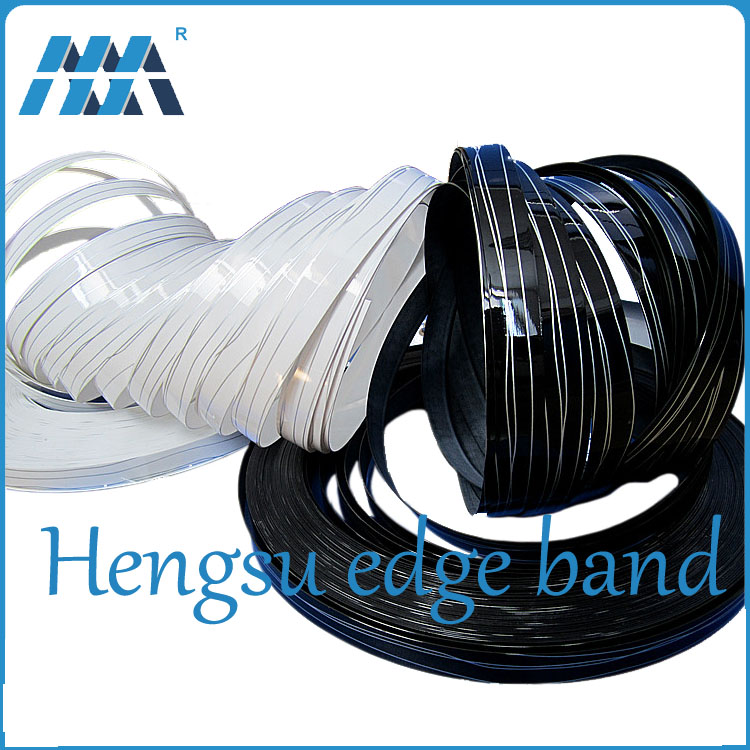
Hengsu manufactures both families for furniture factories and distributors. Start from the PVC edge banding range when you need solid, wood grain, or high gloss PVC, and ask Hannah when the program needs ABS.
Gate 1 — Does the end market ban chlorine / halogen?
Run this check before you compare price lists.
- Yes (common in many EU / public / multinational specs): ABS (or another approved halogen-free option). PVC is not a workaround if the PO forbids chlorine-containing polymers.
- No: PVC remains a valid option. Continue to machine and price checks.
US cabinet work often accepts PVC under local panel-focused rules; always read the customer’s material sheet. Export programs that re-ship into Europe frequently standardize on ABS to avoid dual inventories.
Gate 2 — What does your edgebander use?
- Standard hot melt (EVA or PUR): Both PVC and ABS can work. Dial temperature, pressure, and feed rate per material; run a short trial roll before locking a container.
- Laser or hot-air / NIR: Many lines are built around ABS functional layers. Confirm with your machine maker before ordering PVC for those stations.
If you already buy hot melt adhesive with your edges, keep adhesive type and edge polymer as one package decision—especially for kitchens and humid rooms where PUR is often preferred.
Gate 3 — Price tier and where the edge is seen
PVC usually wins on cost per meter for high-volume interiors and budget RTA. ABS usually wins when the edge is highly visible, the brand sells “chlorine-free,” or the buyer will not accept PVC.
A practical factory pattern:
- Map SKUs as edge-visible vs edge-hidden.
- Put ABS (or thicker premium PVC) on visible fronts and open shelves.
- Keep PVC on carcass interiors and hidden parts when the market allows it.
- Quote both materials on the same board program so purchasing can see the delta in one sheet.
Specs buyers should lock on the RFQ
Whether you choose ABS or PVC, send the same checklist so quotes are comparable:
- Material: PVC or ABS (do not leave “edge banding” vague)
- Thickness and width (for example 0.4 / 0.6 / 1 / 2 / 3 mm; 12–65 mm or custom)
- Surface: solid, wood grain, matte, high gloss
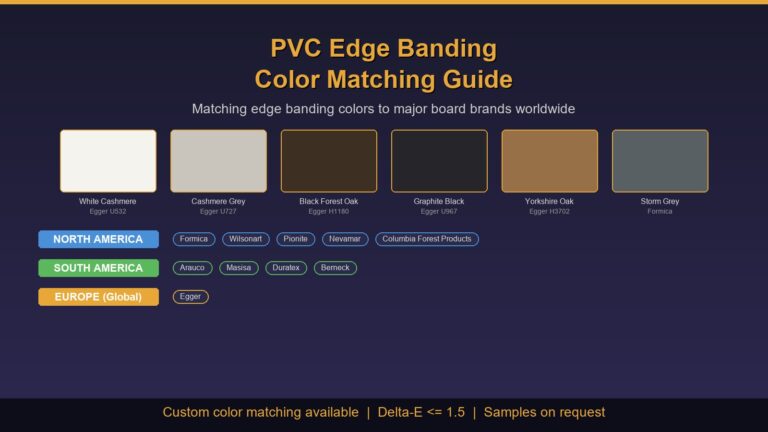
- Board reference: sample, photo, or décor code for color matching (Formica, AGT, Egger and other common panels)
- Adhesive plan: EVA vs PUR; pre-glue or factory glue
- Packing: roll length, carton, OEM label
- Destination market and any halogen-free requirement
Hengsu’s confirmed PVC planning figures for Dongguan production (use on RFQs; not industry averages):
| Item | Factory fact |
|---|---|
| Thin PVC 0.4–0.6 mm MOQ | 50,000 m per color per size |
| 0.6 mm and above MOQ | 3,000 m per size per color |
| Lead time reference | About 20 days per 20ft container |
| Large single-color runs | Often smoother / faster because fewer print-line cleanouts |
| OEM packing | Per customer requirements |
For a deeper MOQ walkthrough, see PVC Edge Banding MOQ Explained for Furniture Factories. Thickness choice is covered in Hengsu’s thickness buyer notes on the News page.
When to choose PVC
Choose PVC edge banding when:
- The destination market does not require chlorine-free edges
- You need aggressive cost control on volume cabinets and wardrobes
- You need a wide solid / wood grain / high gloss décor set for board matching
- Your line is a standard hot-melt edgebander and trials look clean
PVC is also the usual starting point for distributors building stock colors. Explore Solid PVC Edging, Wood Grain Edging, and Hi Glossy Edging.
When to choose ABS
Choose ABS edge banding when:
- The PO or retailer handbook requires halogen-free / chlorine-free materials
- You sell into markets or channels that audit polymer type
- Premium or healthcare / contract lines need that documentation story
- Your laser or hot-air process is specified for ABS
Ask for ABS samples on the same board as your PVC trial so QC can compare trim quality, color, and glue line under your plant conditions—not only on a supplier showroom board.
Common mistakes
- Picking PVC only on price, then failing an EU or multinational material check after production.
- Ordering ABS for every SKU when only visible fronts need it—raising cost without a compliance reason.
- Skipping a machine trial after changing polymer; feed and knife settings rarely transfer 1:1.
- Mixing vague titles on the PO (“edge tape”) so the factory cannot lock PVC vs ABS, thickness, and décor.
FAQ
Is ABS always better than PVC?
No. ABS is better when compliance or positioning requires it. PVC is often the better commercial choice for unrestricted volume programs.
Can one factory supply both?
Yes. Many furniture plants run both. Hengsu supports PVC programs in depth and can discuss ABS requirements with your RFQ—send market rules and board samples together.
Does ABS replace the need for good adhesive?
No. Edge polymer and adhesive are separate. Humid kitchens and high-stress edges still need the right glue system and process control.
How do I start a quote?
Send thickness, width, PVC or ABS, surface type, meters per color, destination, and a board sample or photo. Use the Contact page or WhatsApp Hannah.
Next step
If you are still weighing ABS vs PVC edge banding for a live project, send your board sample and market requirement. Hengsu will help you map PVC vs ABS by SKU, confirm MOQ by thickness, and quote export packing for your container plan.
Contact Hannah — WhatsApp / WeChat +86 135 3269 6082 · hannah@edgebandhengsu.com · Contact us