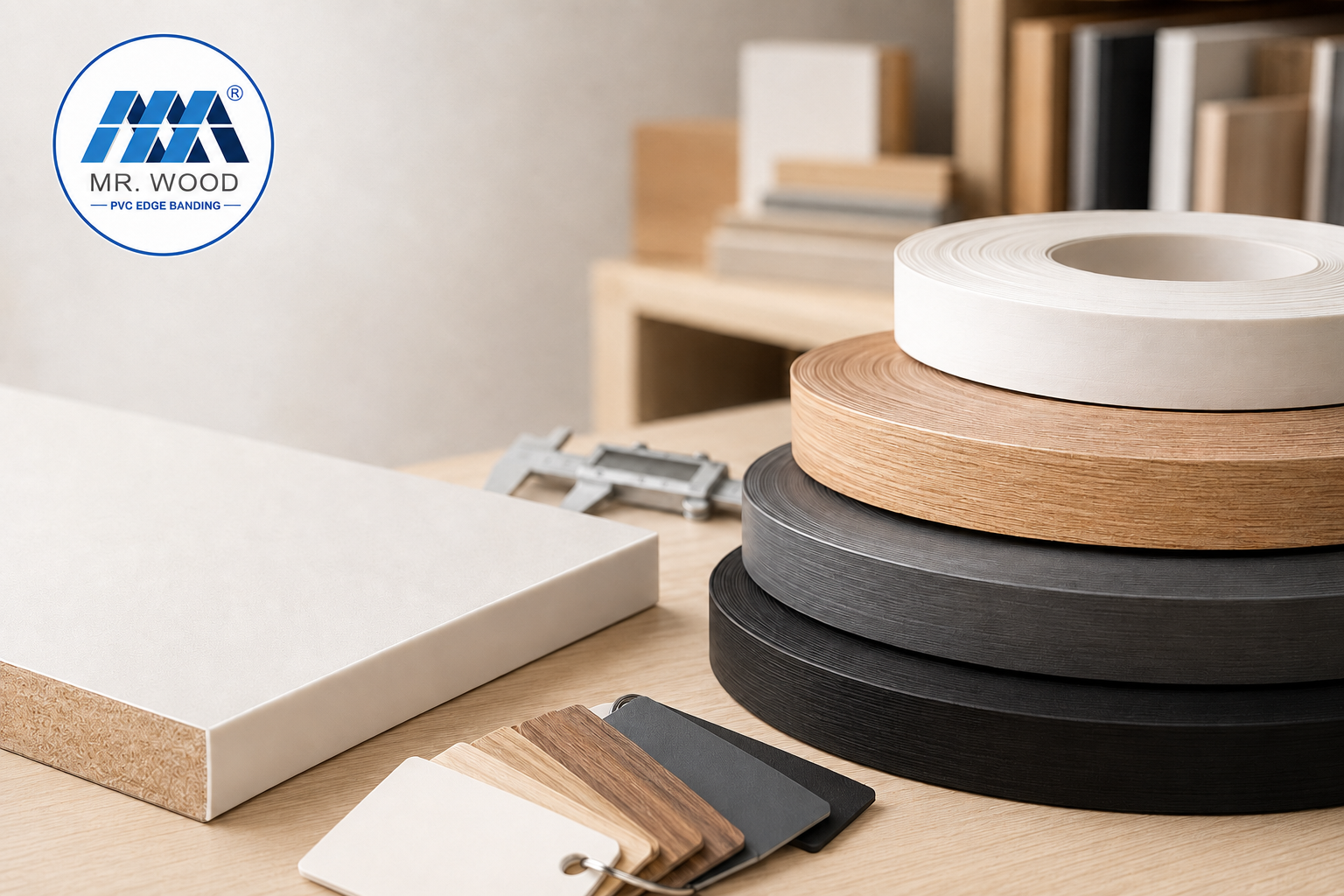

Choosing PVC edge banding is not only a matter of finding a similar color or comparing the lowest price. The selected edge must fit the panel, furniture application, surface design, adhesive system, and edge banding process.
The supplier must also be able to reproduce the agreed specification when repeat orders are placed.
For furniture manufacturers, cabinet factories, panel processors, and distributors, a structured selection process helps reduce problems such as visible glue lines, mismatched color or gloss, difficult trimming, and inconsistent results between batches.
This guide explains what buyers should confirm before requesting samples or quotations from a PVC edge banding supplier.
- Start with the Furniture Application
The correct specification depends on where and how the finished panel will be used.
Common applications include:
- Kitchen cabinets and wardrobes
- Office and commercial furniture
- Shelving and storage systems
- Interior doors and decorative panels
- Retail fixtures and other interior applications
Also consider how frequently the edge will be touched or exposed to impact.
A concealed cabinet edge does not have the same visual and mechanical requirements as the exposed edge of a desk, table, or retail fixture.
The application should therefore be the first item discussed with the supplier—not the last.
- Match Thickness to Performance and Appearance
PVC edge banding is available in different thicknesses because the edge has both a decorative and protective role.
Thinner options are commonly considered for less exposed areas and cost-sensitive panel construction. Thicker options may be selected when a more substantial edge appearance, stronger impact protection, or a rounded profile is required.
Do not select thickness by habit alone. Ask:
- Is the edge exposed or concealed?
- What panel thickness is being used?
- Is a square or rounded edge appearance required?
- What trimming and radius capabilities does the equipment support?
- Does the application face frequent contact or impact?
Hengsu’s current product range includes PVC edge banding from 0.45 mm to 3 mm in thickness.
The final selection should be confirmed according to the actual panel, furniture application, and processing method.
- Specify the Correct Width
The edge banding must be wider than the panel so that its upper and lower edges can be trimmed cleanly during processing.
However, excessive overhang can increase material consumption and trimming work.
When requesting a quotation, provide:
- Actual panel thickness
- Required finished edge
- Edge banding machine or processing method
- Preferred trimming allowance, if your production team has an established standard
Hengsu offers PVC edge banding in widths from 12 mm to 65 mm.
Buyers should confirm the required width instead of ordering only by a general product name.
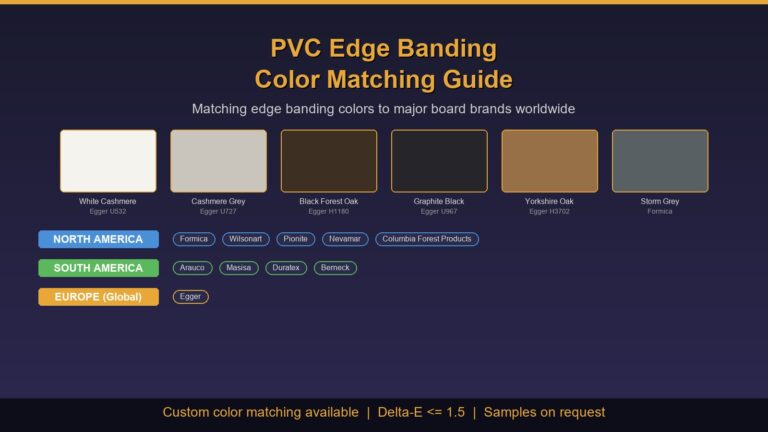
- Treat Color, Gloss, and Texture as Separate Requirements
A color code alone is not always enough to achieve a visually consistent edge.
The edge banding should be evaluated together with the furniture board under realistic lighting conditions.
Check four elements:
- Base color
- Printed pattern or woodgrain
- Gloss level
- Surface texture
For solid colors, send a physical board sample or an approved color reference whenever possible.
For woodgrain and decorative panels, confirm both the printed design and the surface embossing. A close color match with the wrong gloss or texture can still look visibly different on finished furniture.
Approval should be based on a physical sample whenever the project requires close decorative matching.
- Confirm the Adhesive and Processing Conditions
PVC edge banding is normally processed with a suitable bonding system.
The final result depends on the combined behavior of the edge banding, adhesive, board, machine settings, and workshop conditions.
Suitable hot-melt adhesive systems may include EVA, PA, APAO, and PUR, depending on the application.
Material temperature, adhesive temperature, feed rate, pressure, and cutting-tool condition can all influence the finished edge.
Before full production:
- Confirm the adhesive type with the adhesive and edge banding suppliers.
- Bring stored panels and edge banding to a suitable workshop temperature.
- Check adhesive application and pressure settings.
- Use clean and sharp trimming and milling tools.
- Test the approved combination on the actual furniture panel.
Machine parameters should follow the recommendations for the specific adhesive, equipment, and material combination.
A setting used successfully for one project should not automatically be assumed suitable for every other project.
- Evaluate Samples Like a Production Buyer
A sample should do more than look attractive in a sample book. It should be tested under the conditions that matter to your factory.
Visual checks:
- Compare the color under more than one lighting condition.
- Check gloss and texture against the board.
- Inspect the surface for visible defects.
- Examine the edge after trimming and polishing.
Dimensional and processing checks:
- Measure width and thickness at several points.
- Check whether the roll feeds consistently.
- Apply the material to the intended panel.
- Inspect bonding, trimming, corners, and the finished glue line.
- Record the sample reference used for approval.
The approved sample and written specification should remain the reference for the bulk order.
- Ask the Supplier About Repeat-Order Control
A successful first sample is important, but B2B buyers also need consistency over time.
Before approving a PVC edge banding supplier, ask how the following items are recorded and reconfirmed:
- Material and dimensions
- Color or decor reference
- Gloss and texture
- Primer or back treatment
- Roll length and packaging
- Approved physical sample
- Batch and order identification
Buyers should request evidence for any certification, test result, tolerance, or performance claim that affects their market or application.
Avoid relying only on broad descriptions such as “high quality” or “premium grade.”
- Send a Complete Request for Quotation
A complete inquiry helps the supplier respond more accurately and reduces repeated clarification.
Include the following information:
- Product material: PVC
- Required thickness and width
- Color, decor, or physical board reference
- Surface finish and texture
- Panel material and thickness
- Furniture application
- Adhesive and processing method, if known
- Required quantity and packing preference
- Destination country or port
- Sample or compliance-document requirements
If some parameters are still unknown, send the intended application and board reference first.
The supplier can then identify which information must be confirmed before sampling or production.
About Hengsu
Dongguan Hengsu New Material Co., Ltd. manufactures and exports edge banding and related furniture materials in Dongguan, Guangdong, China.
Our current product range includes:
- PVC edge banding
- ABS edge banding
- PMMA and acrylic edge banding
- Hot melt adhesive
For PVC edge banding, Hengsu offers:
- Thicknesses from 0.45 mm to 3 mm
- Widths from 12 mm to 65 mm
- Solid-color, woodgrain, and other decorative options
- Solutions for kitchens, cabinets, wardrobes, office furniture, and interior projects
Request PVC Edge Banding Specification Guidance
Are you preparing a new PVC edge banding project?
Send Hengsu your board or decor reference, required thickness and width, furniture application, processing method, estimated quantity, and destination market.
Our team will review your requirements and discuss the appropriate next step for specification confirmation or sampling.
Email: hannah@edgebandhengsu.com
Website: www.edgebandhengsu.com
WhatsApp / Phone: +86 135 3269 6082
Frequently Asked Questions
What information should I send to a PVC edge banding supplier?
Send the required material, thickness, width, color or board reference, surface finish, application, estimated quantity, processing method, and destination.
Physical samples are preferable when close color and texture matching is required.
How do I choose PVC edge banding thickness?
Base the decision on the furniture application, exposure to impact, desired edge appearance, panel construction, and equipment capability.
Test the proposed thickness on the actual panel before confirming a bulk order.
Why should color, gloss, and texture be checked separately?
Two products can have a similar base color but look different because of their gloss level or surface embossing.
Compare the edge banding and board together under realistic lighting and approve a physical sample.
Can PVC edge banding be used with hot melt adhesive?
PVC edge banding is commonly processed with suitable hot-melt adhesive systems.
The correct adhesive and operating settings depend on the edge banding, panel, equipment, and end-use conditions. Follow the relevant supplier recommendations and conduct a production trial.
What should be checked before placing a repeat order?
Reconfirm the approved sample, dimensions, color or decor, surface finish, primer or back treatment, roll and packaging details, and any required test or compliance documents.